Featured
Table of Contents
Treatment can not make all of life's challenges vanish, yet it can aid you begin reacting to tough people or situations in healthier, a lot more productive means.
Evolution in therapy is constantly a positive indication. It indicates you're boosting and progressing, and it declares that you're being sustained where you are currently, not where you were when you started. Achieving your initial objectives and establishing brand-new ones with your therapist demonstrates real momentum in your healing trip.
Development in treatment is hardly ever, if ever before, linear. This means things will not always occur in a straight line or in a predictable way. You might have obstacles, regressions, or tough minutes in the process, however it's important to keep in mind that these are part of the procedure, not an indicator of failing.
Are you taking into consideration therapy however are unsure just how frequently you should participate in sessions? In this article, we will check out the inquiry: Just how frequently should you go to treatment sessions?
The Process in Anxiety Therapy
The reason is straightforward: treatment is a technique. Just like reflection, yoga exercise, workout, creating, or any kind of other practice, it requires uniformity of immersion with a lot of method to find out and internalize the technique.
This will certainly equip you to make choices that seem like your options (not just adaptations to the needs of other individuals). As you learn to recognize and browse the intricacies of your internal world via of treatment, you will locate higher authenticity and creativity in work and in your partnerships.
We urge you to consult with one of our specialists to identify the right frequency for you. It is also vital to recognize that, in cases of economic difficulty, most of our specialists can and will suit a minimal regularity of treatment. Our company believe that it is essential to fulfill you where you are and to relocate at the rate you identify, as you get started on this extensive trip.
Many individuals most likely to treatment once a week, and some could even go two times a week if they are taking care of acute distress or have extensive treatment goals. As they proceed, these sessions may come to be much less regular. For those with less pushing issues that just participate in therapy for ongoing upkeep, bi-weekly and monthly sessions suffice.
What Makes Quality Anxiety Counseling
There isn't just one aspect dictating the variety of times one need to most likely to treatment, however various variables that play a duty in identifying therapy frequency. These factors can be interior (individual battles, inspirations, and so on) and outside (therapeutic components). By comprehending these elements, you will know why your specialist creates a specific timetable and why that timetable is most suited to your healing journey.
In such situations, twice-weekly sessions may be required. Meeting the specialist a lot more regularly in the onset of treatment is commonly suggested. Maybe on an once a week or once every two weeks basis, and the factor for this is simple: the more you meet with the therapist, the sooner the restorative bond can be developed.
Clinically-Proven Techniques for Emotional Wellness
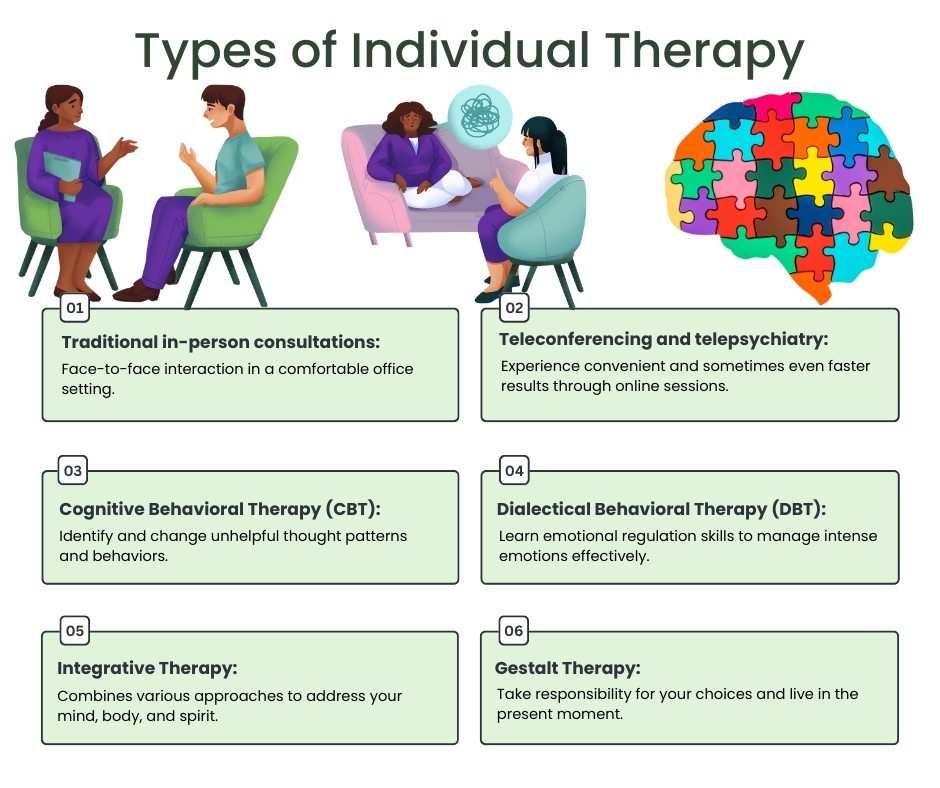
The regularity of therapy sessions additionally comes down to what treatments are being used. Different therapy strategies have different session frequency suggestions since some can be extensive while others might not be. Psychoanalysis generally requires numerous sessions a week, while psychodynamic therapy (what we supply at Depth Counseling) might require just weekly sessions.
Your budget plan, job routine, individual availability, and the range in between your home and the facility must all be gone over with your specialist. This is crucial for setting a treatment schedule that maintains you dedicated without adding any type of unnecessary tension. Regardless of the psychological health condition, going to weekly therapy sessions can be advantageous for all those who on a regular basis go to treatment.
Change is Available with the Perfect Treatment
When therapy sessions are arranged at an established period, it allows you and the specialist to create a more powerful alliance, which, consequently, produces greater rely on much less time. This creates a safe area where you can refine and discuss your experiences, thoughts, and feelings with your specialist to ensure that they can acquire insight into your battles.

As you satisfy your therapist much more frequently, the possibility of issues going unaddressed, nonetheless small, is reduced. With consistent regular follow-ups, the therapist can review the progression made and reinforce coping devices and new learnings regarded required for producing long-term adjustments. A therapistclient partnership is established on trust, and without routine meetings, it can be challenging to construct that trust fund.
Keeping Change Beyond Active Treatment
When you really feel understood and unconditionally supported, you can share your ideas, sensations, and struggles without reservation. For intimate discussions to stream freely, it is necessary to have a helpful setting where individual expression is not suppressed by judgment. One method to produce such a secure space is to fulfill your specialist on a regular basis to review your problems and find resolutions during the time committed to you.
It is a vital component of mental healthcare that can have an extensive influence on a person's total wellness. Determining will certainly be required is a continuous procedure that may call for modifications in the process. It is important to pay focus to indicators that show the demand to enhance or lower the.
Discuss your interest in your specialist and discover the opportunity of even more intensive therapy. If you locate on your own experiencing raised distress, enhanced signs, or a worsening of your psychological health problem, it might indicate the need for even more regular treatment sessions. Communicate these changes to your therapist to ensure that they can adjust your therapy strategy as necessary.

Latest Posts
Developing Coping Skills Via Multilingual Methods
When Body-Centered Therapy Strengthens Emotional Health for Clients
Growth from Unattainable Goals to Healthy Achievement